Textiles & the sleeping environment
Silk Blankets Through the Seasons: Weight, Warmth, and Construction
A silk blanket can seem almost paradoxical: light in the hand, yet capable of making a bed feel noticeably warmer. The explanation lies not in a single miraculous property but in a meeting of fiber, fill, fabric layers, and construction. Understanding those parts makes it easier to compare blankets as textiles—and to understand why two pieces both called “silk” may behave quite differently.
Published November 12, 2026
A blanket is a small climate system
At night, a bed is less a static arrangement than a climate under negotiation. The sleeper gives off heat and moisture; the room may cool, warm, or remain stubbornly constant; sheets and covers slow the movement of air between body and room. A blanket’s job is not simply to be warm. It is to help keep that exchange comfortable.
Silk enters the discussion with an appealing reputation for softness and temperature regulation, but the word alone does not tell us how a particular blanket will feel. A blanket made with silk filling, one woven from silk fabric, and one that combines a silk exterior with another material inside are different constructions. Each holds and releases warmth in its own way. Even among blankets with silk filling, the amount of filling, its distribution, and the materials enclosing it all matter.
Thinking about construction is more useful than treating “silk” as a complete performance description. A fiber has qualities, but a finished textile is an arrangement of fibers, yarns, layers, seams, and edges. That arrangement determines whether a blanket lies close to the body, drapes over it, traps still air, or lets warmth dissipate.
This is also why seasonal use cannot be assigned by material name alone. A lightweight silk-filled layer may suit a warm room or a sleeper who prefers modest coverage. A more substantial construction may make sense in cooler conditions. But a person’s comfort, the room’s temperature, the bedding already on the bed, and the blanket’s care requirements belong in the same conversation.
What “weight” can—and cannot—tell you
Weight is an obvious place to begin, though it is not always as straightforward as it sounds. Product descriptions may state the weight of the silk fabric, the mass of the filling, or a figure for the finished blanket. These measurements describe different things. A fabric weight does not, by itself, reveal how much insulation the blanket provides; nor does a blanket’s total weight tell you exactly how its filling is distributed.
In silk bedding, the term momme is often used to describe the weight of woven silk fabric. It can be a helpful point of comparison when the number refers to comparable fabric, but it should not be mistaken for the fill weight of a blanket. A silk shell with a particular momme value and a silk-filled blanket described by grams per square metre are reporting different aspects of textile construction. When the specification is unclear, the practical question is simple: what part of the blanket does this number describe?
Fill weight more directly concerns the amount of insulating material in a filled blanket. In general, a greater amount of filling can provide more warmth, but the relationship is not absolute. The type and arrangement of the fill, the density of the outer fabric, and the quilting or stitching pattern affect how heat is held. A compact, heavy-feeling blanket is not automatically warmer than a loftier one; a delicate drape does not automatically mean poor insulation.
There is also a distinction between physical weight and perceived warmth. A blanket may feel light because it does not press heavily on the body, while still offering useful coverage. That quality can be welcome to sleepers who dislike a weighty pile of bedding. Conversely, some people find the pressure of a heavier blanket reassuring. Preference is not a textile defect. It is part of the specification that matters most in daily use.
When comparing descriptions, look for the unit, the material it applies to, and whether the figure is a total or a per-area measurement. If none is given, avoid drawing strong conclusions from adjectives such as “warm,” “all-season,” or “lightweight.” They may convey an intended use, but without construction details they are not precise technical measurements.
Filling, shell, and the spaces between
A filled silk blanket commonly consists of an inner layer of silk fibers enclosed by a fabric shell. The silk may be arranged in a continuous web or layers of floss, depending on the blanket’s method of manufacture. The shell contains the filling, protects it from handling, and contributes its own feel against the body. A blanket woven from silk, by contrast, derives its structure and surface from yarns interlaced in the fabric rather than from a separate insulating fill.
Silk fibers are fine and can be arranged to form a soft, pliable layer. In a filled construction, the spaces among fibers and within the blanket’s layers help influence how heat moves. Air that remains relatively still can slow heat loss; air that moves freely can carry warmth away. The goal is not to seal the sleeper off from the room, but to create a comfortable balance between retaining warmth and allowing excess heat and moisture to escape.
The shell has a quiet but important role. A closely woven outer fabric can hold the filling in place and provide a smooth, orderly surface. A softer, more fluid shell may change the drape and tactile impression. The composition matters too: a shell described as silk is not the same as one made from cotton or a blend. Reading the material list is therefore more informative than relying on a blanket’s general name.
Construction details can make the difference between a blanket that stays evenly filled and one that develops cold or bulky spots. Stitching, quilting, or other forms of anchoring can limit movement of the inner material. The arrangement must balance containment with comfort: stitching that divides a blanket into small compartments can keep fill from migrating, while the shape and size of those compartments affect how the textile bends over the body.
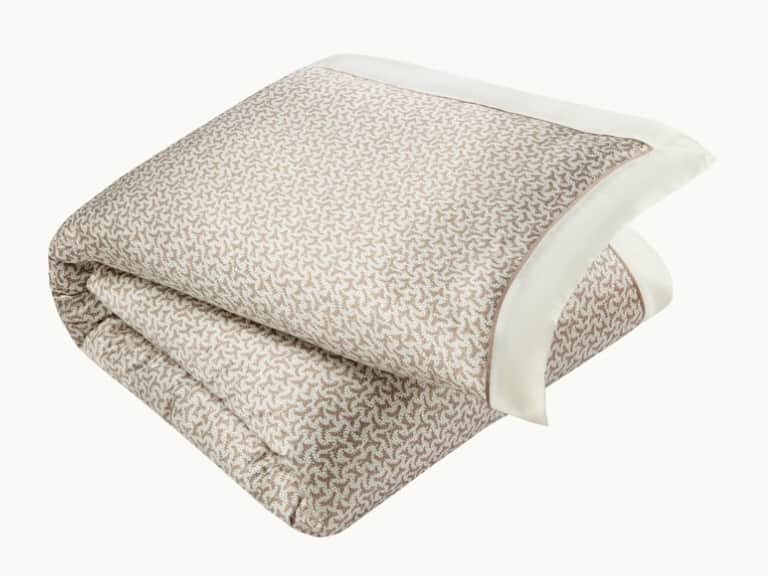
Finishing deserves attention too. A bound edge, for example, gives the perimeter a neat, reinforced finish and may help protect it from wear. It also adds a strip of material and a line of structure around the blanket. Satin binding can feel smooth against the hand, while a firmer binding may make an edge more defined. It is a modest detail, but edges are handled often—folded back, tucked under, pulled straight—and tend to reveal the maker’s choices.
The seasonal question
It is tempting to sort blankets into winter and summer categories, as if the calendar itself dictated the correct layer. In practice, a bedroom has its own weather. Insulation, ventilation, heating, humidity, bedding beneath the blanket, and individual temperature preference all complicate the neat division. A sleeper in a cool, drafty room may welcome a layer that feels excessive to someone in a heated apartment.
In warmer months, a lighter silk blanket may be useful as a cover that feels less substantial than a thick comforter. Its appeal may be the sense of coverage without the bulk of heavier bedding. Yet “breathable” does not mean “cool under every circumstance.” If the room is hot, the bedding is layered, or the sleeper tends to overheat, even a relatively light blanket can feel too warm. Fiber helps shape the experience; it does not override the room.
In cooler weather, a filled blanket can serve as one layer in a system rather than a complete substitute for every other cover. A sheet beneath it and a duvet or cover above it each contribute to the warmth and feel of the bed. Layering gives the sleeper room to adjust: remove one piece, fold it at the foot, or add coverage as conditions change. A silk blanket’s light drape can make it particularly easy to use in this flexible way.
During transitional seasons, the room may change temperature over the course of a night. A blanket that is comfortable at bedtime may feel warm by dawn, or the reverse. This is where a breathable construction can be valuable, though actual experience will depend on the blanket’s fill, shell, and the sleeper. Rather than assume that any silk blanket is inherently suited to every season, consider how it will fit into the bedding already in use.
A useful assessment begins with ordinary observation. Does the bedroom stay cool overnight? Does the sleeper wake warm, chilly, or comfortable? Is a blanket needed as a primary cover or as a light layer? Answers to those questions are more revealing than a season printed on a label. The best seasonal guide is the actual sleeping environment, not an abstract image of winter or summer.
Drape, touch, and the experience of warmth
Warmth is not only a matter of insulation; it is also a matter of contact. A blanket that follows the contours of the body feels different from one that floats above it. Drape describes how fabric falls and moves, and it is shaped by fiber, yarn, weave, weight, and finishing. Silk’s smooth hand and fluid movement can make a blanket feel elegant without making it stiff or cumbersome.
The first touch of a fabric can be cool, particularly when it has a smooth surface and draws heat away from the skin at the point of contact. That initial impression is not the same as its performance over a whole night. Once the blanket settles into place, its layers and trapped air influence how warmth is retained. In other words, a cool hand does not necessarily mean a cold night, just as a soft surface does not establish a particular insulation level.
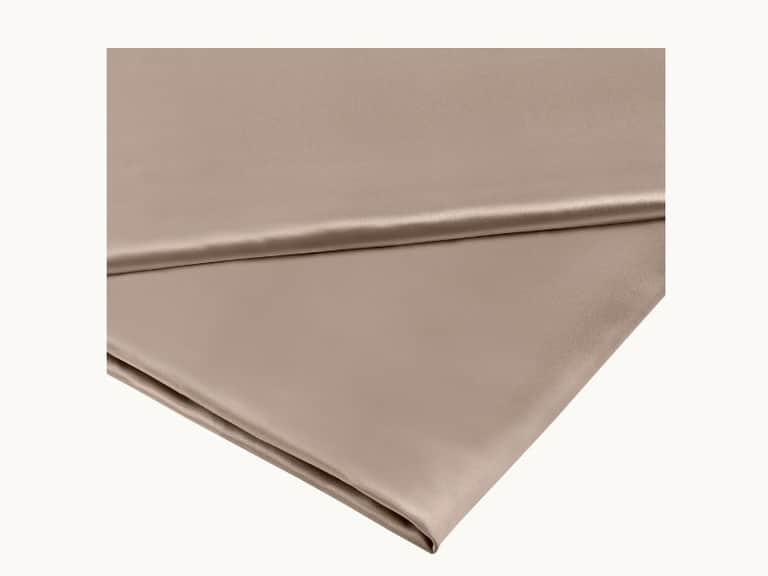
There is a visual side to drape as well. A blanket with a fluid fall can soften the outline of a bed, while a more structured edge holds a cleaner line. A subtle sheen may shift with folds and changes in light. These are aesthetic characteristics, but they are not separate from use: a piece that is pleasant to handle and easy to fold may be more likely to become part of a regular routine than one that remains decorative at the bed’s foot.
Silk’s low-friction surface is often discussed in relation to hair and skin. The practical experience will vary, and a blanket’s surface is only one part of a person’s bedding. A silk sheet or pillowcase makes more sustained contact with the body than a blanket placed over other layers. It is reasonable to appreciate silk’s smoothness without turning every material characteristic into a guaranteed health outcome.
Care is part of construction
A textile’s usefulness depends partly on how it can be cared for. Silk is a protein fiber, and finished silk goods can be sensitive to heat, friction, harsh detergents, and prolonged exposure to strong sunlight. But care instructions differ among products, because shell fabric, filling, dyes, stitching, and finishing may all affect what is safe. The label for the particular blanket should take precedence over general advice.
Some silk bedding is designed for gentle machine washing; other pieces require professional cleaning or a more restricted method. A machine-washable shell does not necessarily mean the entire filled blanket can be washed in the same way. Before cleaning, check whether the instructions refer to the whole blanket, a removable cover, or a separate component. When the care guidance is unclear, asking the maker or consulting a textile-care professional is safer than improvising.
For washable items, mild detergent, a delicate cycle, and restrained temperatures are common recommendations, but they are not universal permission slips. Avoid bleach and aggressive agitation unless the product instructions explicitly allow them. Air drying can help limit heat stress; direct, prolonged sunlight may alter color or weaken vulnerable fibers over time. A cool iron, if permitted, is different from pressing the fabric with high heat.
Routine airing can refresh bedding between washes, but it should not be confused with removing soil or replacing cleaning when needed. Store a clean blanket dry, away from direct light and from rough objects that could snag the shell. Folding it loosely rather than compressing it under heavy items may help preserve its loft and drape. Such habits are unglamorous, which is to say they are usually the ones that work.
Care affects the long-term character of a blanket. A fabric may grow softer with use, while color and sheen can change depending on washing and exposure. These changes are not always signs of failure; they are part of how textiles age. Still, gentle handling gives a well-made piece a better chance of keeping its intended feel and structure.
A clear-eyed way to compare blankets
When evaluating silk blankets as a textile category, begin with questions rather than adjectives. Is the blanket woven silk or silk-filled? What is the outer fabric made from? What is the filling made from, and is its weight stated? How is the filling held in place? Is the edge bound? What does the care label allow? These details give a more complete account of the object than a single claim about warmth.
It is also useful to distinguish what is known from what is inferred. A stated fill weight is a specification. A claim that a blanket is suitable for every season is an intended-use description. A smooth hand can be observed by touch; a promise of improved sleep cannot be concluded from texture alone. Clear terminology does not diminish the pleasure of a beautiful textile. It makes the pleasure easier to understand.
- Identify the construction: determine whether silk forms the shell, the filling, or both.
- Read weight figures carefully: check whether they refer to fabric, fill, or the complete blanket.
- Inspect the finishing: note stitching, quilting, edge binding, and any removable components.
- Match the layer to the room: consider overnight temperature, existing bedding, and personal preference.
- Check care before use: cleaning requirements are part of a blanket’s practical design.
None of these questions turns comfort into a laboratory exercise. They simply make comparisons more honest. A blanket is not a number on a tag; it is a textile in a particular room, used by a particular person, under a particular combination of covers. The technical details help explain what to expect, while the sleeper’s experience remains the final measure.
The quiet intelligence of a well-made layer
The appeal of silk blankets lies partly in the way they resist easy categorization. They can be delicate in appearance and practical in use, lightweight yet insulating, decorative yet meant to be handled. Their performance is not a mystery, though it may be obscured by broad claims. Look closely and the blanket resolves into understandable parts: fiber, fill, shell, air, seams, edges, and care.
Across the seasons, the same blanket may play different roles. It can be a modest cover on a warm night, a middle layer in cool weather, or an extra fold within reach when the room’s temperature shifts. Its usefulness depends less on the season named in a description than on how its construction meets the conditions of the bed.
That is the central lesson of textile construction: material matters, but arrangement matters too. Silk supplies a distinctive fiber and a particular tactile vocabulary. Weight, layers, finishing, and care translate those qualities into an object with a specific character. Once those elements are understood, the question is no longer simply whether silk is warm. It is what this silk blanket is made to do—and whether that is the kind of warmth, weight, and drape a sleeper wants.